A Guide to Visiting Burgundy
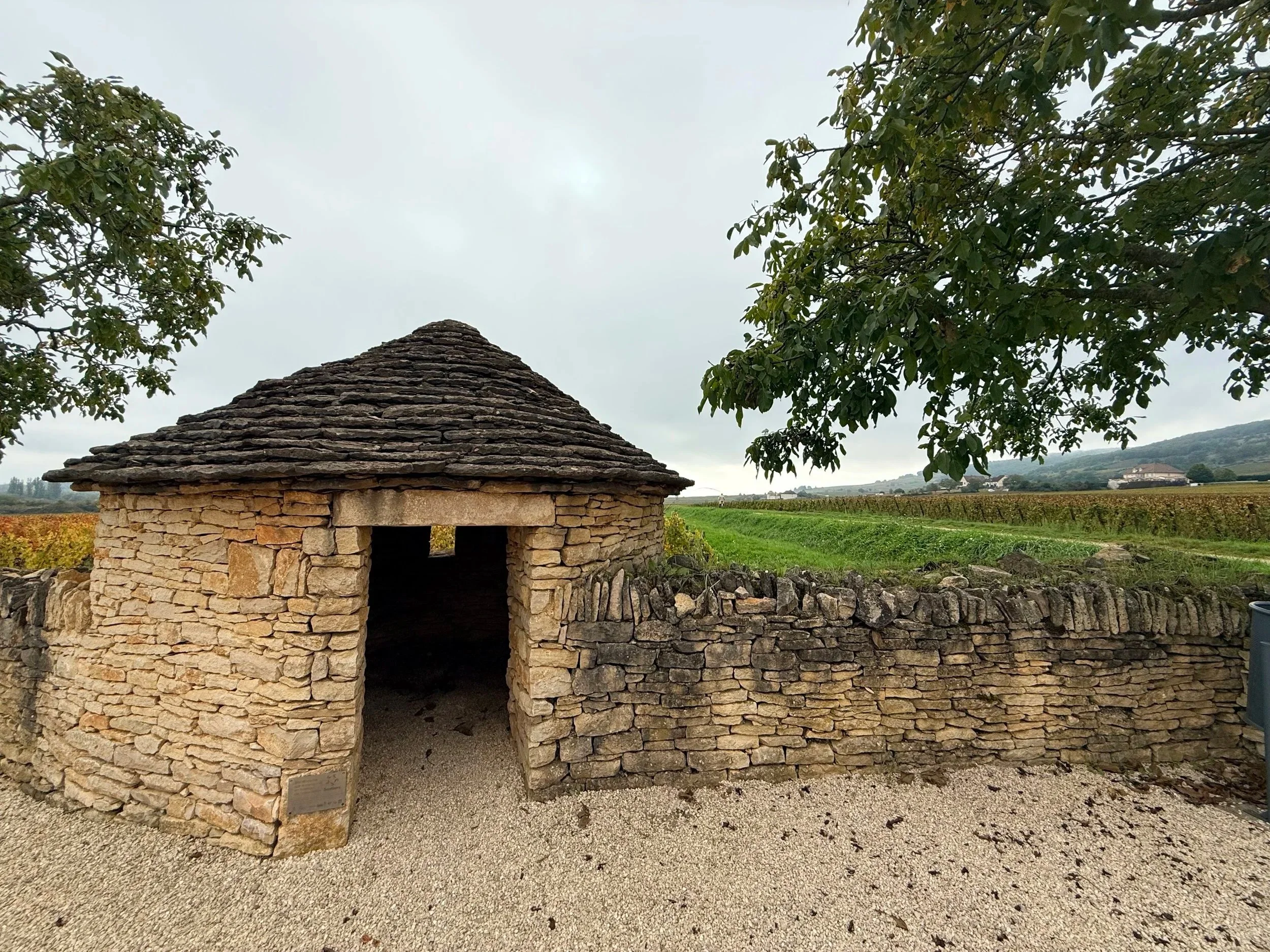
Views along the Burgundy bike route
Itinerary Overview
If there’s a place that can make you start googling “cost of living in France” at 2 AM, it’s Burgundy. The villages are out of a storybook, the vineyards roll on forever, and the wine is unbeatable.
This guide is built around a relaxed three-day core itinerary, with suggestions for stretching your time if you have more, starting in Dijon and heading south through the Côte d’Or. You’ll base yourself in Beaune, explore both the Côte de Nuits and Côte de Beaune with expert-led wine tours, and spend one day biking through some of the most iconic vineyards on Earth.
For this trip, I’d highly recommend booking a professional tour like Bourgogne Gold Tour (elevated but commercial experience) or, if you’re a serious wine / Burgundy lover, you’ve got to go with Bill Nanson of The Burgundy Report, because 1. scheduling your own appointments can be difficult - but it’s doable in a pinch, especially at the more commercial wineries, and 2. this wine region is large, complex, and really benefits from having an expert to share their knowledge and handle the logistics.
Use this as your roadmap, and swap in any domaines, tasting stops, or restaurants you’re excited about.
Getting There
One of the perks of Burgundy is that it’s easy to get to. The high-speed train from Paris to Dijon is about 1 hour 35 minutes, city center to city center, no fuss, no transfers. You roll off the train and you’re already in the heart of things.
Dijon is also well connected to other major hubs, with direct routes from cities like Lyon, Strasbourg, and Basel, so you can slot Burgundy into a larger France or Europe trip.
Once you’re in Dijon, everything flows naturally south into the Côte d’Or, making it the perfect kickoff point for your trip.
Region Overview
Burgundy is one of the most storied wine regions in the world - a long, skinny stretch of eastern France where two grapes, Pinot Noir and Chardonnay, reign supreme. Instead of big estates or sprawling vineyards, Burgundy is about tiny parcels, centuries of tradition, and the idea that a few rows of vines on one slope can taste completely different from the vines just across the road.
The region itself is divided into several subregions (Chablis to the north, the Côte d’Or at the center, and the Mâconnais and Beaujolais to the south), but your time will be focused on the heart of the Côte d’Or - the stretch most travelers dream about.
The Côte d’Or: The Heart of Burgundy
The Côte d’Or is split into two sections:
Côte de Nuits (north) - the beating heart of Pinot Noir
Côte de Beaune (south) - home to legendary Chardonnay and excellent Pinot Noir
This is where the magic happens: limestone-rich slopes, tiny villages, and storied vineyards.
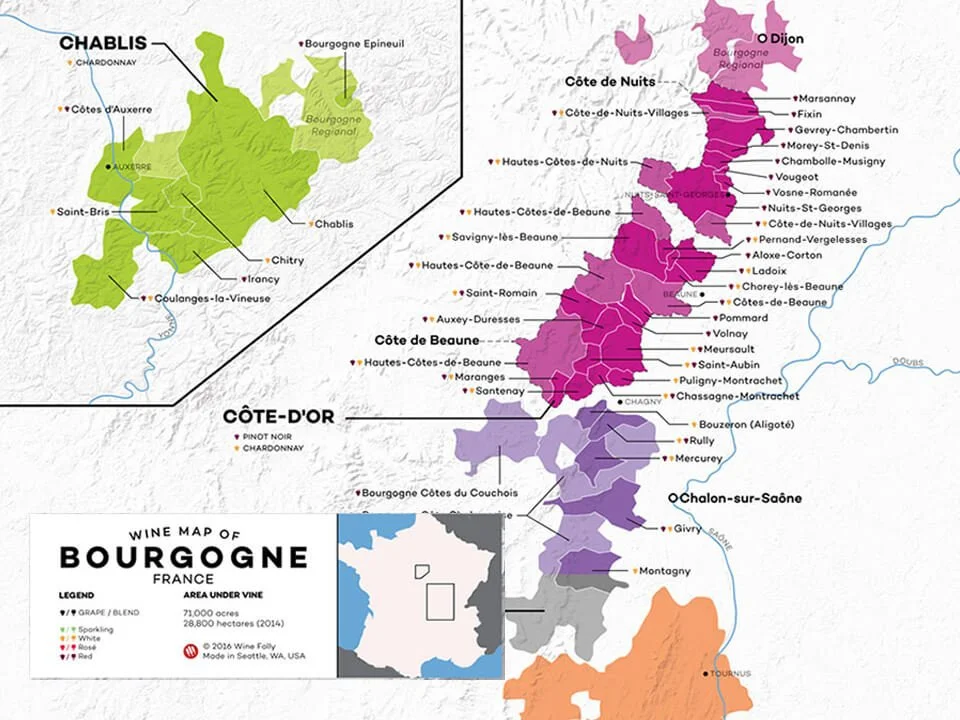
Map of Burgundy and Cote d’Or highlighted in pink. Image from Wine Folly.
Côte de Nuits: Structured, Iconic Pinot Noir
Running from just south of Dijon to Nuits-St-Georges, the Côte de Nuits is all about depth and structure. Think darker fruit, more tannin, more muscle — wines that feel almost architectural in how they unfold.
Key villages to know:
Gevrey-Chambertin: bold, structured, famous for power
Morey-Saint-Denis: refined, quietly intense
Chambolle-Musigny: silk, perfume, elegance
Vosne-Romanée: often called “the velvet glove” of Burgundy
Nuits-St-Georges: darker, earthier, more rustic charm
If Pinot Noir is what brought you to Burgundy, this is the stretch that explains why.
Côte de Beaune: Legendary Chardonnay + Charming Reds
From Beaune down to Santenay, the Côte de Beaune broadens the picture. This is where Chardonnay becomes transcendent — layered, mineral, expressive wines that feel effortlessly elegant. But the reds here are underrated: softer, brighter, more red-fruited than their Côte de Nuits counterparts.
Key villages to know:
Meursault: rich but balanced Chardonnay
Puligny-Montrachet: laser-focused, mineral-driven whites
Chassagne-Montrachet: generous, structured Chardonnay (plus great reds)
Volnay & Pommard: expressive Pinot Noir; Volnay = finesse, Pommard = structure
Santenay: approachable, great value, and a perfect bike-day terminus
If the Côte de Nuits is moody and intense, the Côte de Beaune is luminous, relaxed, and a little sunnier — both literally and metaphorically.
Where to Stay
Dijon: This itinerary assumes you’re either already in Dijon or arriving early that morning. If you can swing it, come in the day before - Dijon deserves a few unhurried hours. The historic center is compact, walkable, and full of great cafés, wine bars, and those half-timbered streets. One overnight is perfect: enough time to explore, reset, and be ready for your Côte de Nuits day without sprinting off the train.
If your schedule’s tighter, arriving in the morning works too. Bonus - there’s an adorable little garden right next to the train station that is worth a pop into if you’ve got a few minutes to spare.
Where we stayed: Mama Shelter, which is the perfect spot given it’s prime and walkable location to both the train station and the historic city centery.
Beaune: Beaune is your home base for the rest of the trip - it’s central, charming, and perfectly positioned for the Côte de Beaune, the Voie des Vignes bike route, and those slow evening walks after dinner. Most tasting days start and end here, which keeps the logistics simple. Stay inside the old town if you can; it makes everything feel close, atmospheric, and easy to navigate. Hotels, apartments, boutique inns - you really can’t go wrong as long as you’re within the city center.
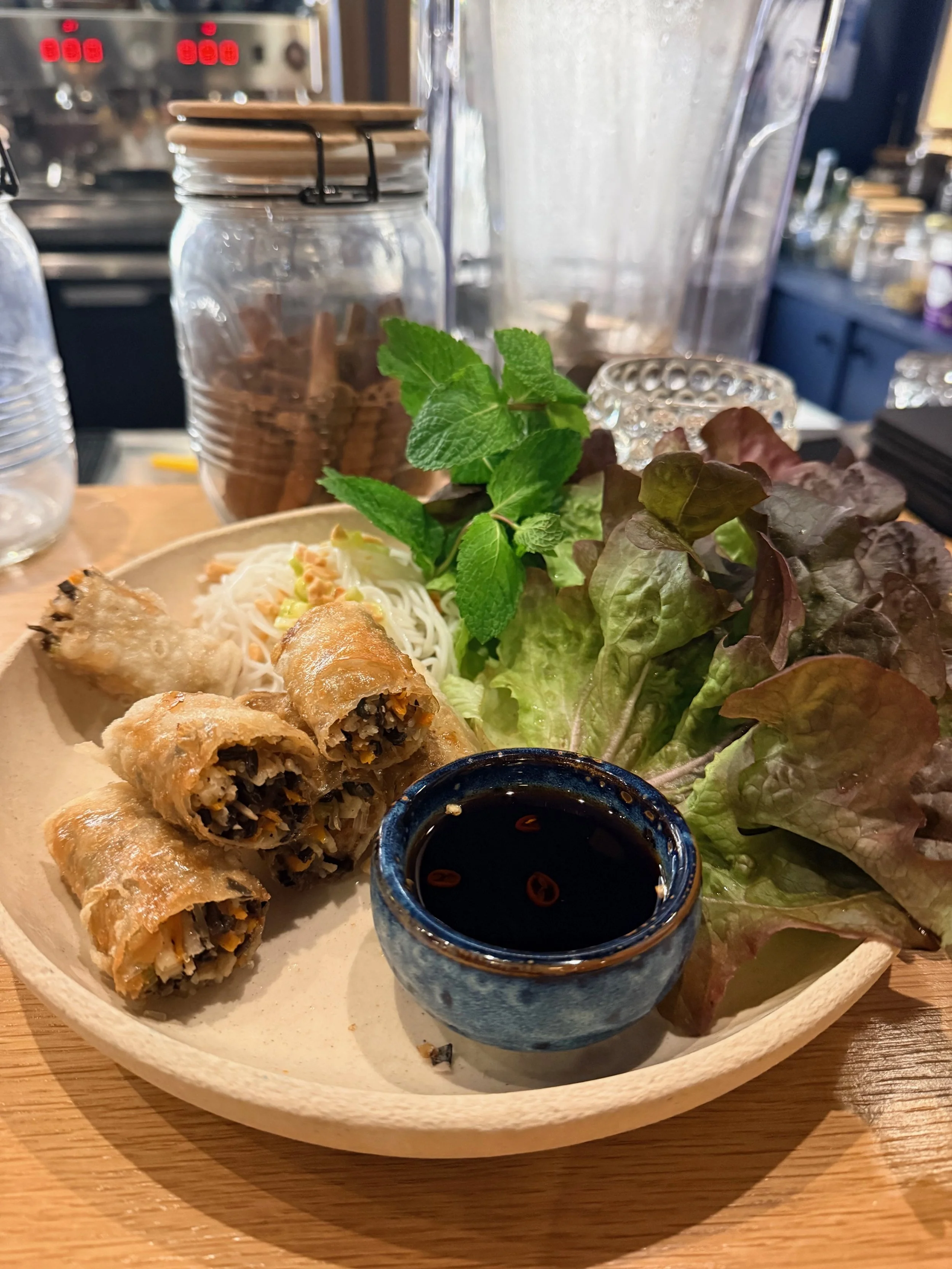
Where we stayed: Maison 1896, which is definitely a bit of a splurge, but it was absolutely lovely. They have a Vietnamese restaurant on-site, which made it extremely easy to find some relief from the traditional French fare and they easily accommodate plant-based diets. They also include a lovely breakfast spread, which is key ahead of a day of wine tasting!
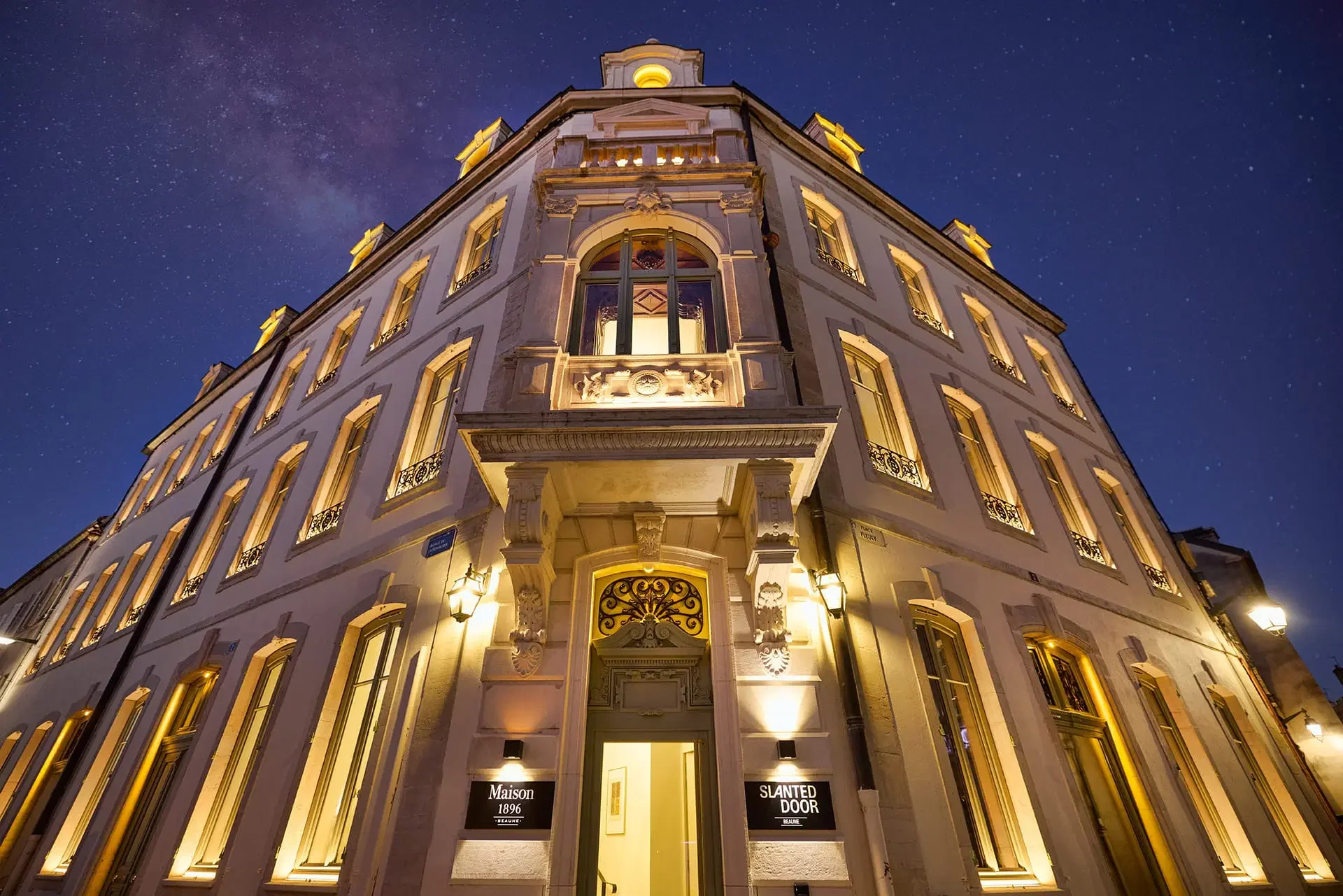
Hotel Maison 1896 and restaurant Slanted Door
When to Go
Burgundy is gorgeous any time of year, but timing affects crowds, tasting access, and weather. Late spring and fall are ideal: fewer crowds, comfortable weather, and vineyard views that are hard to beat. Summer is vibrant but busier, and winter can be quieter (and cozier).
🍇 September–October (Harvest + Fall) - Peak Magic
If you can swing it, this is the best combo of perfect temperatures and busy-but-electric energy, but there’s some drawbacks. Harvest timing varies, and if you’re there during active harvest, some domaines will basically say, “Cute that you’re here, but we’re picking grapes. Bye.” Others stay open, but expect fewer appointments and more reschedules.
🌸 May–June (Late Spring–Early Summer) - The Sweet Spot
Warm, lush, green, and way less chaotic than fall. Wineries are open, happy, and have enough staff to actually give you attention. This season is great for biking (cool mornings, mild afternoons) and open tasting rooms without the fall feeding frenzy.
☀️ July–August (High Summer) - Pretty but limited Winery Access
You’ll get gorgeous landscapes, but winemakers go on vacation, tasting rooms reduce hours, restaurants close in August, heat waves can be serious. If you want scenery and chilled rosé this is fine, but if you want appointments + proper tastingsit’s not ideal.
❄️ November–April (Winter–Early Spring) - Quiet but Charming
This is the connoisseur season that comes with easier appointments, truffle menus, and less crowds. But the vineyards are bare, the restaurants have limited hours and the days are shorter.
Day 1: Dijon → Côte de Nuits → Beaune
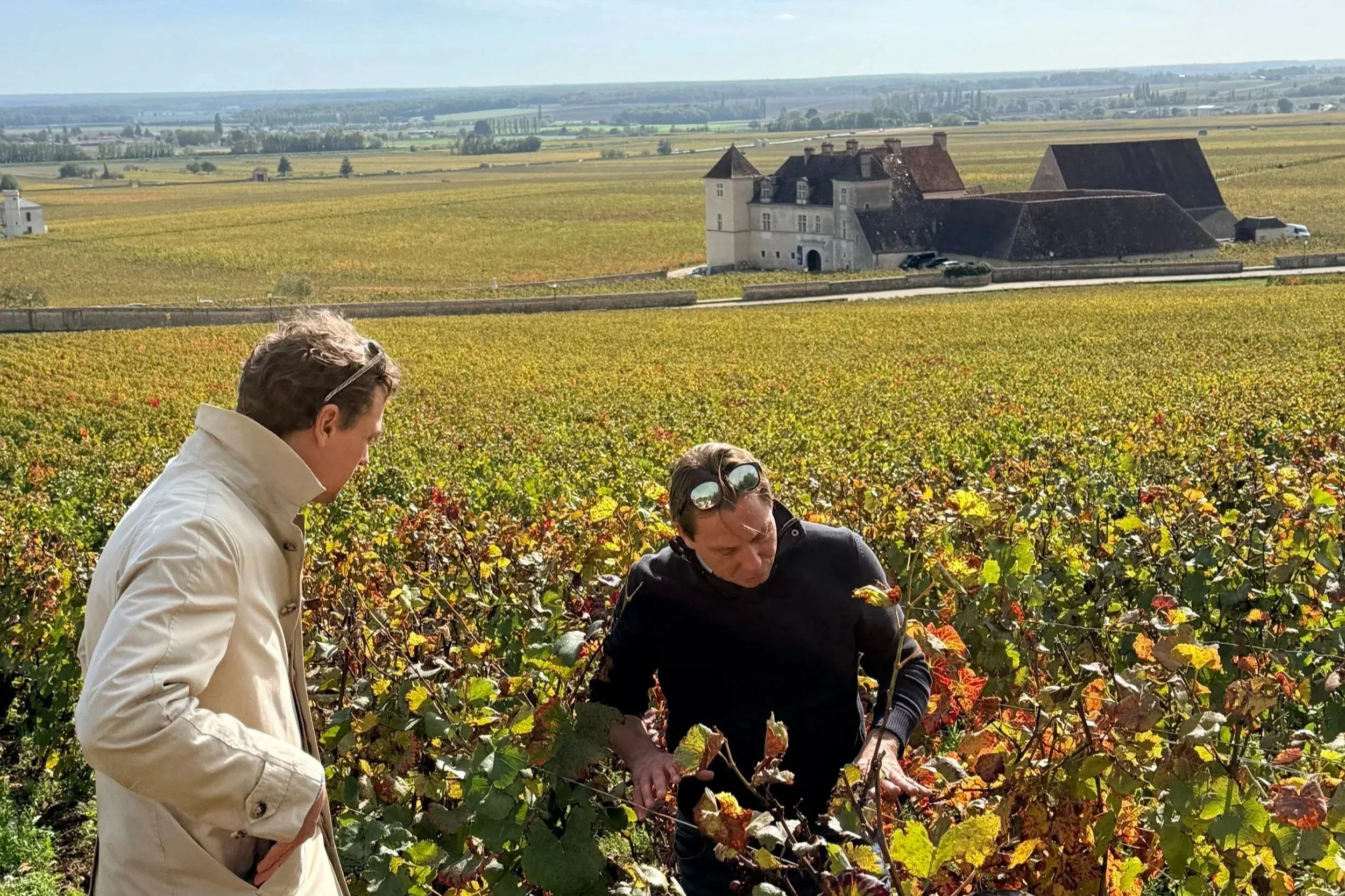
Deep in the vines in the Côte de Nuits with Bourgogne Gold Tour
Start your trip in Dijon, either arriving that morning or spending the night before for a softer landing. From here, head straight into the Côte de Nuits, the northern half of the Côte d’Or and home to some of the most coveted Pinot Noir on the planet.
For a seamless, high-quality introduction to the region, a private tour with a company like Bourgogne Gold Tour works beautifully; they pick you up in Dijon and curate a route south through the key villages. Expect to visit three domaines that showcase different expressions of the slope — think Gevrey’s structure, Chambolle’s finesse, and the deeper styles around Nuits-St-Georges. It’s a smart way to get oriented without backtracking or overcommitting on logistics.
End the day in Beaune, your home base for the rest of the itinerary. Choose a stay within the historic center — properties like Maison 1896 (or your preferred alternative) offer that classic Burgundy charm while keeping you close to dinner, wine bars, and the morning pickup point for Day 2.
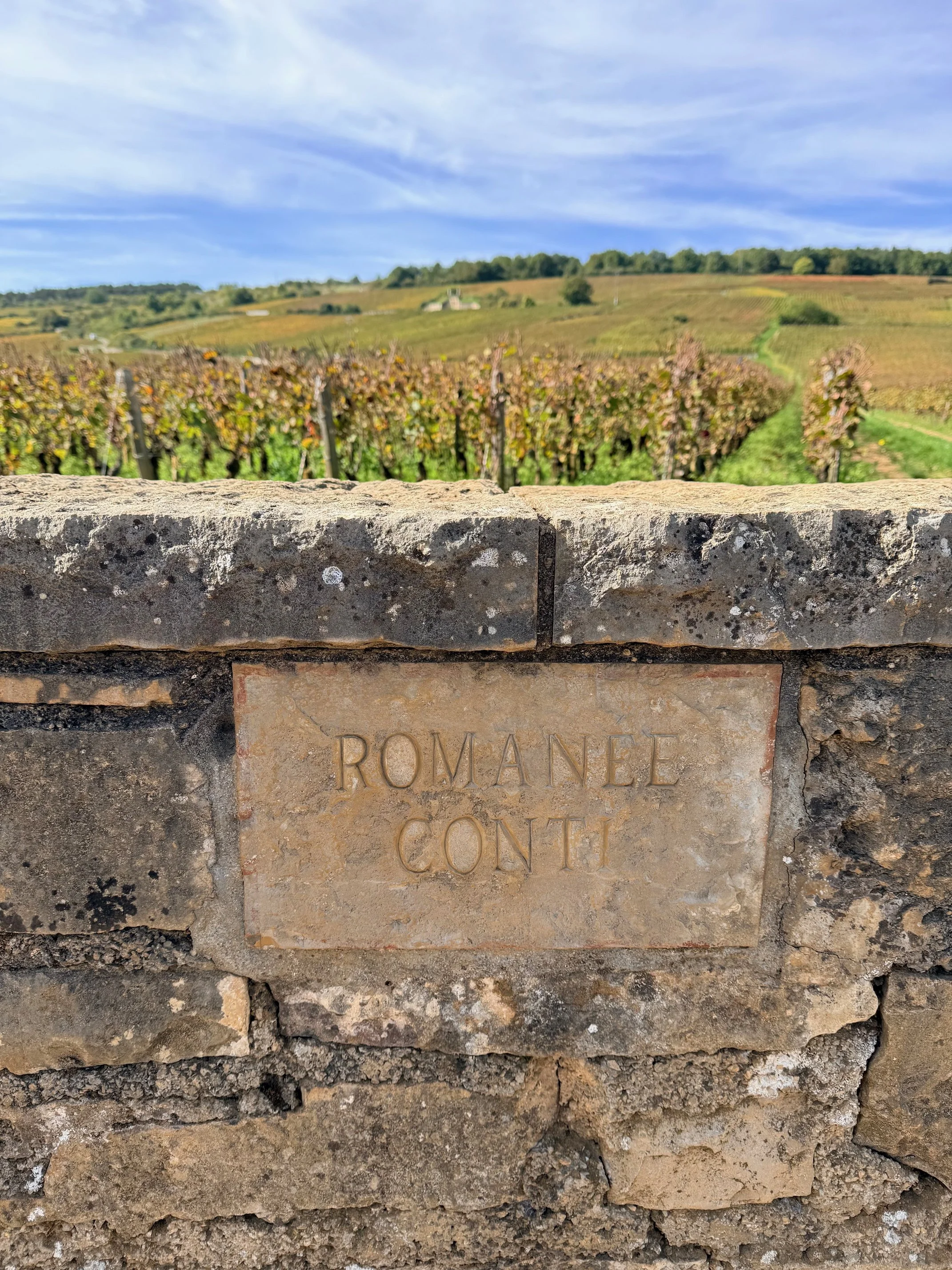
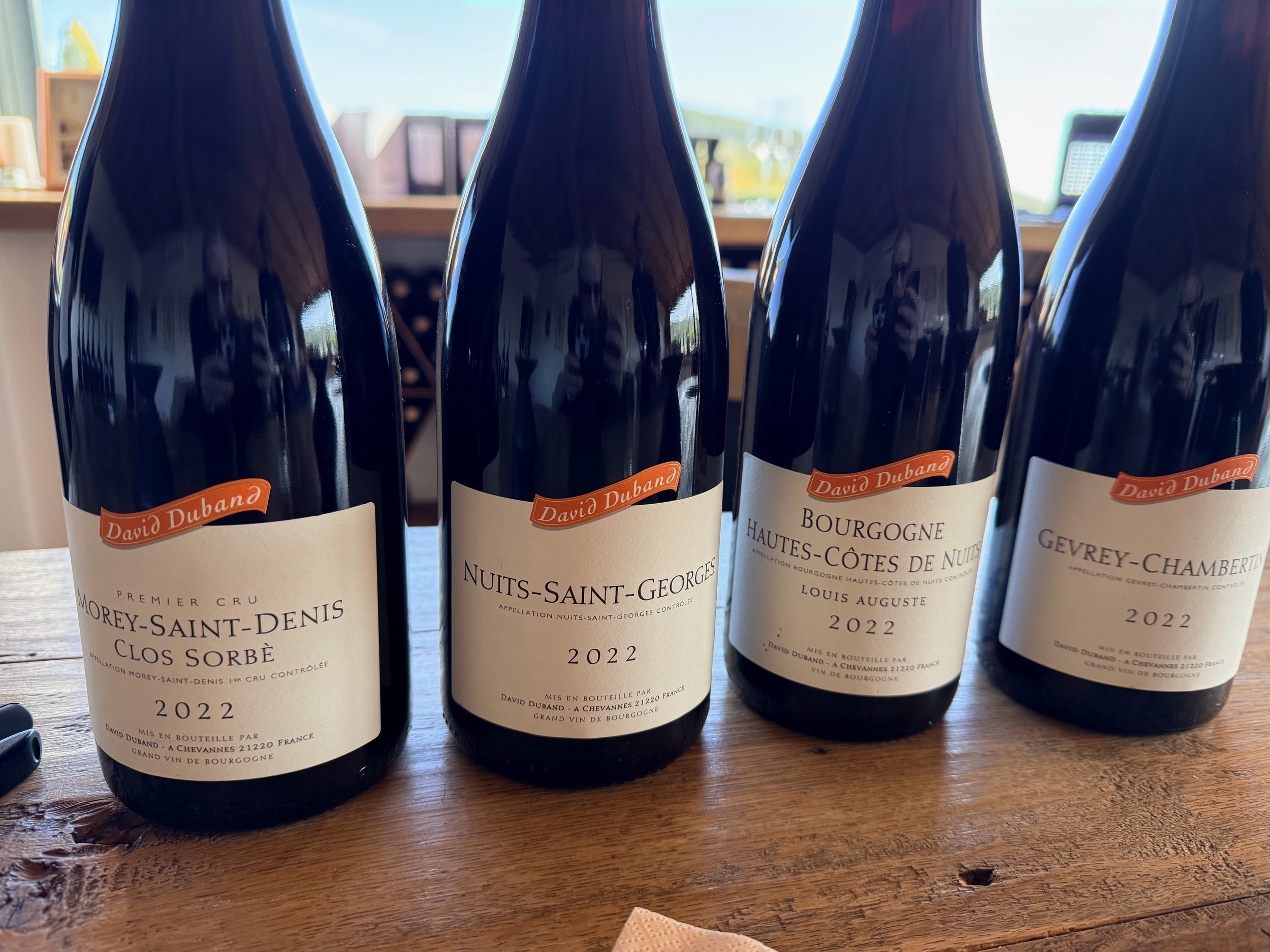
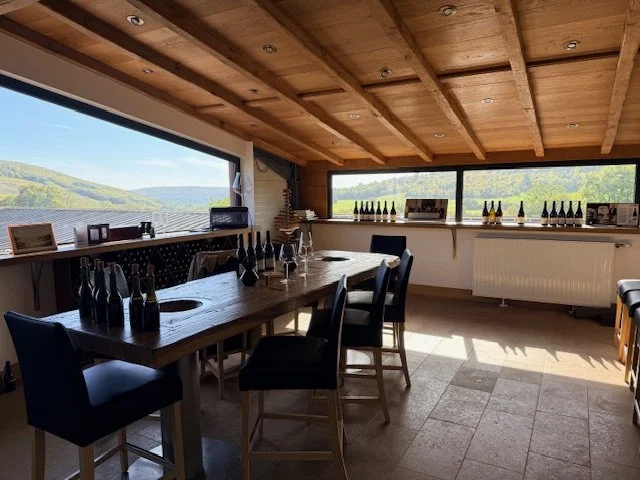
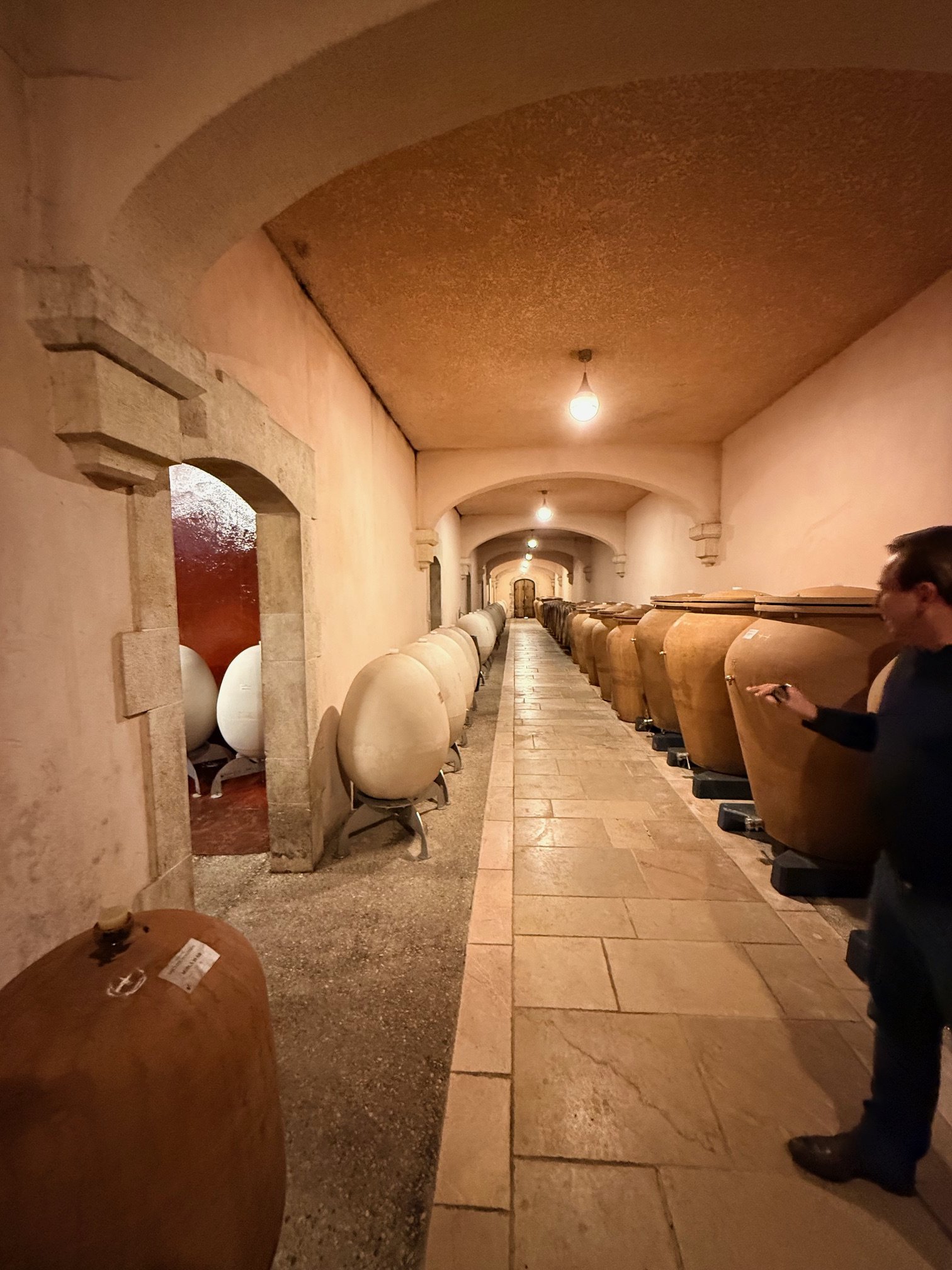
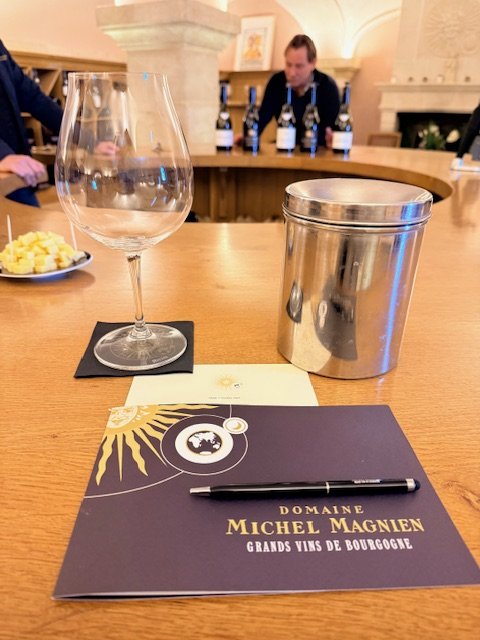
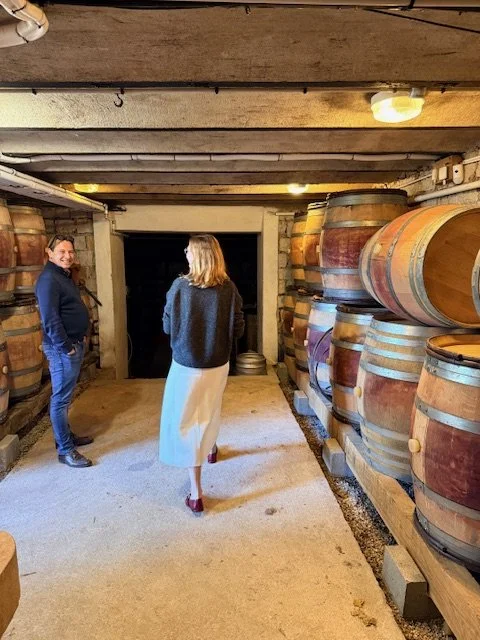
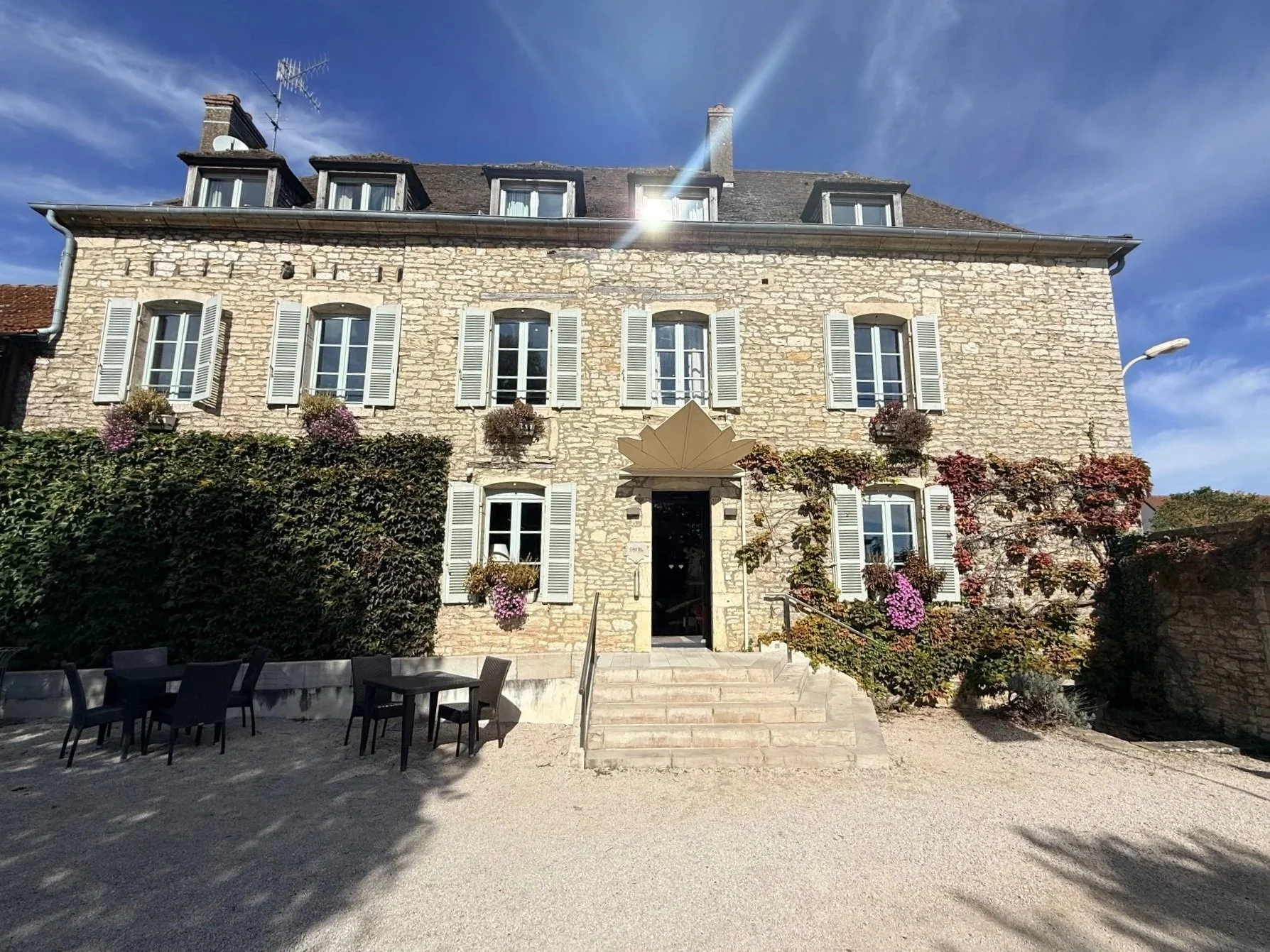
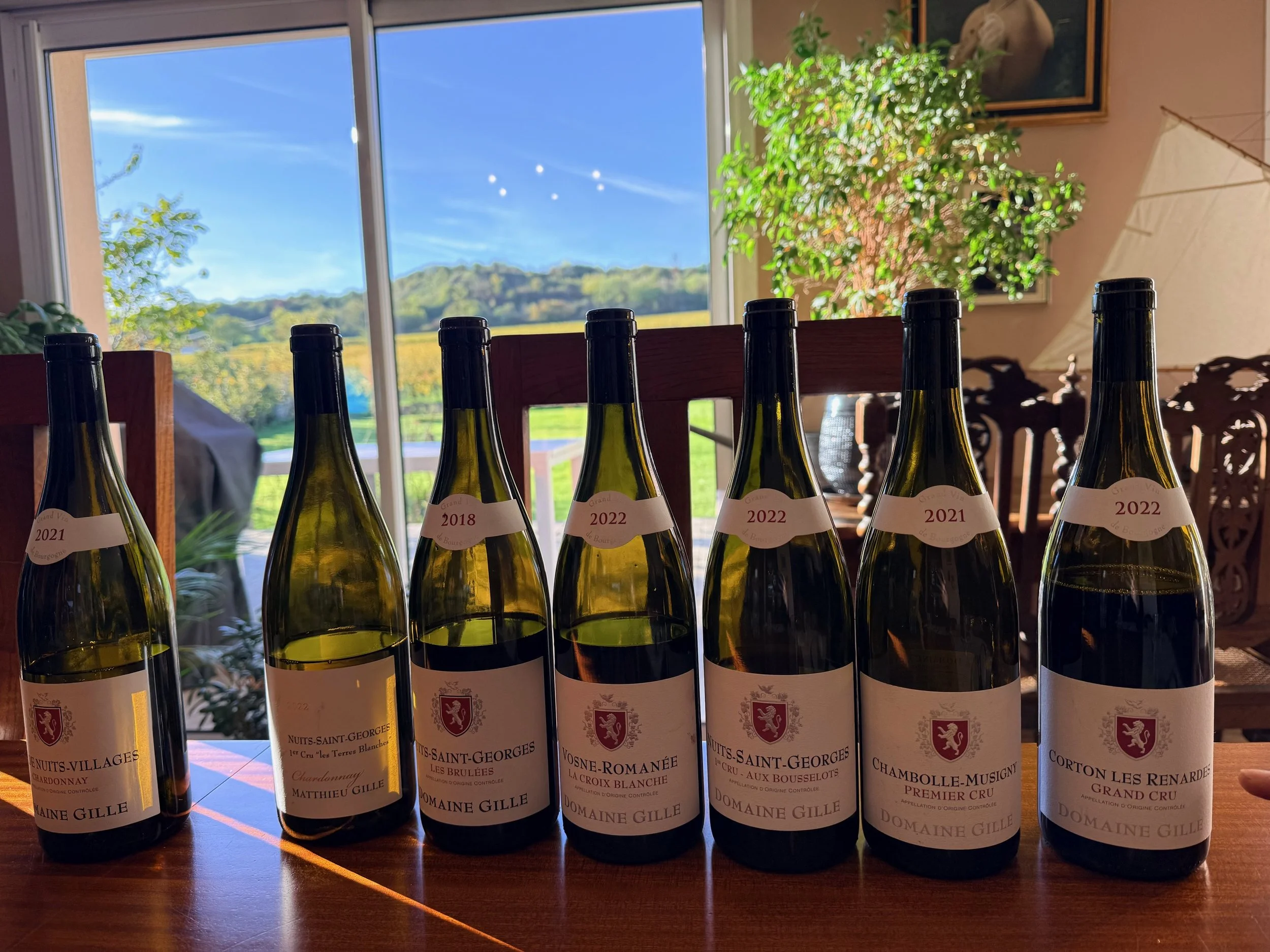
What we did: Arrived from Paris by train the evening before, stayed at hotel Mama Shelter, got picked up by our guide from Bourgogne Gold Tour in the morning, and headed South through the vineyards. We stopped at 3 wineries, wandered some vineyards, had a beautiful lunch, and ended things at hotel Maison 1896 in Beaune. We went to:
Domaine David Duband
Domaine Michel Magnien
Lunch at Castel
Domaine Gille
Day 2: Deep Dive the Côte de Beaune
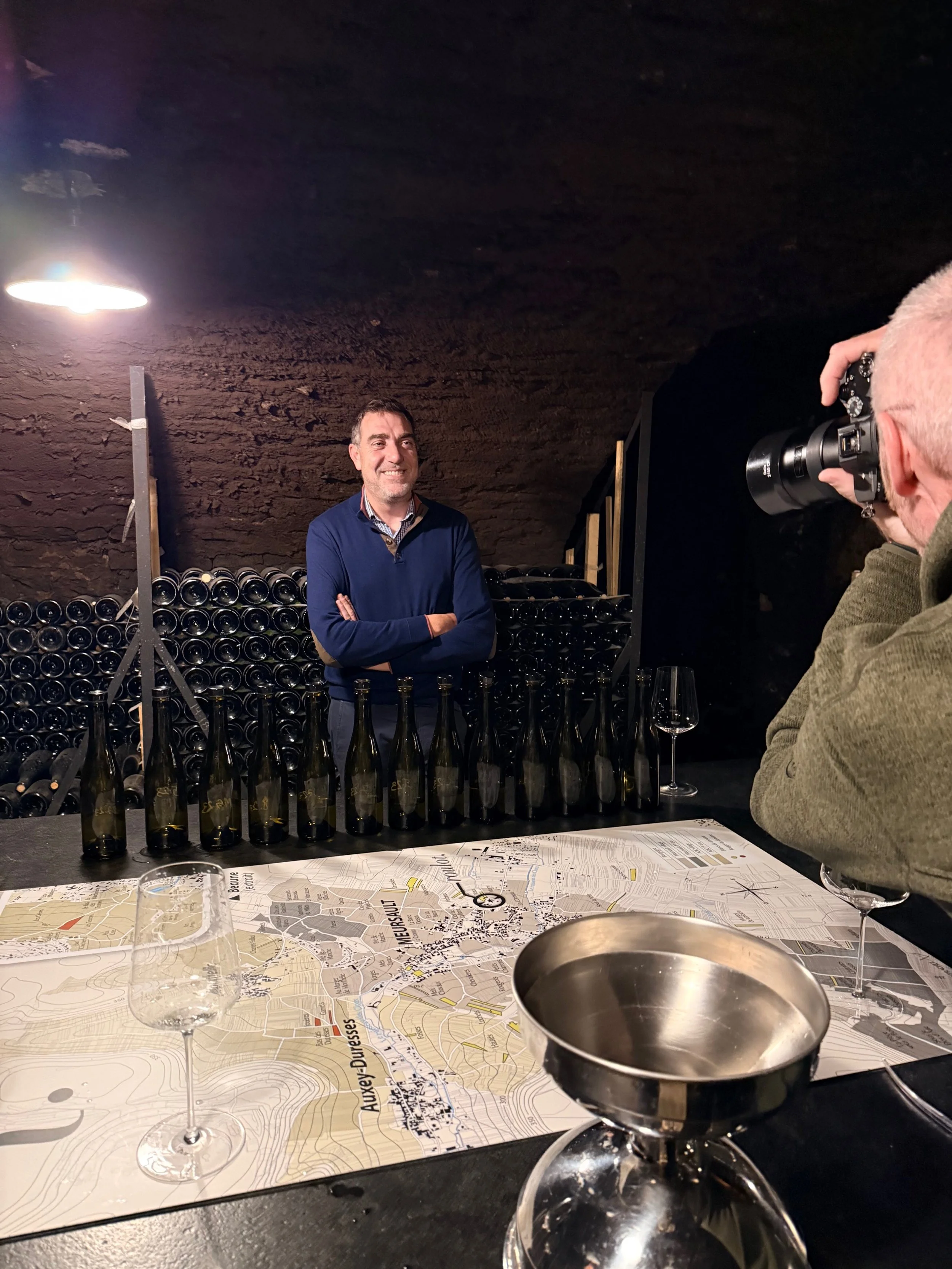
To go deeper — and I mean much deeper — consider spending a day with a wine insider who works directly with producers. We toured with Bill Nanson, a Burgundy critic and writer, and this kind of experience is an entirely different angle than a standard tasting day.
Instead of the usual “three appointments and a cellar tour,” you accompany someone whose actual job is to taste through the latest vintage at multiple domaines. That means visiting small, often family-run estates, tasting full lineups (2024 in our case), and getting candid insights into vineyard plots, winemaking choices, and vintage conditions. It’s immersive, technical, and genuinely eye-opening. You’ll taste a lot - we tried over 70 wines - so mastering the art of spitting is both allowed and encouraged.
Whether you go with Bill or another trusted guide, this day gives you a foundation for understanding Burgundy far beyond labels and village names.
What we did: Bill met us at our hotel for coffee before we ventured off to our day of tasting, including:
Domaine Parent-Gros, Beaune
Domaine Vincent Girardin, Meursault
Lunch at Le Soufflot
Domaine Joseph Voillot, Volnay
Domaine Jean-Marc Roulot, Meursault
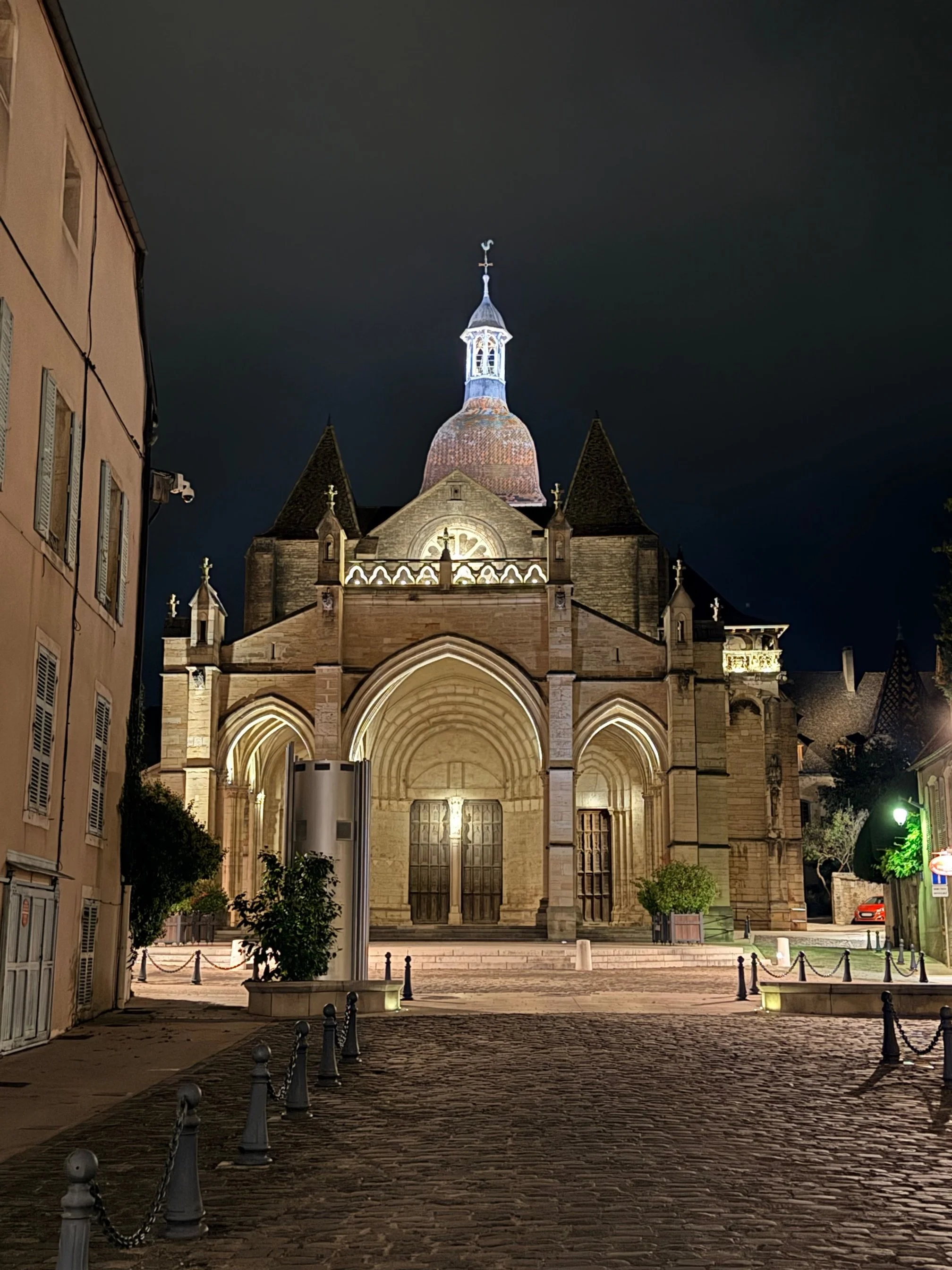
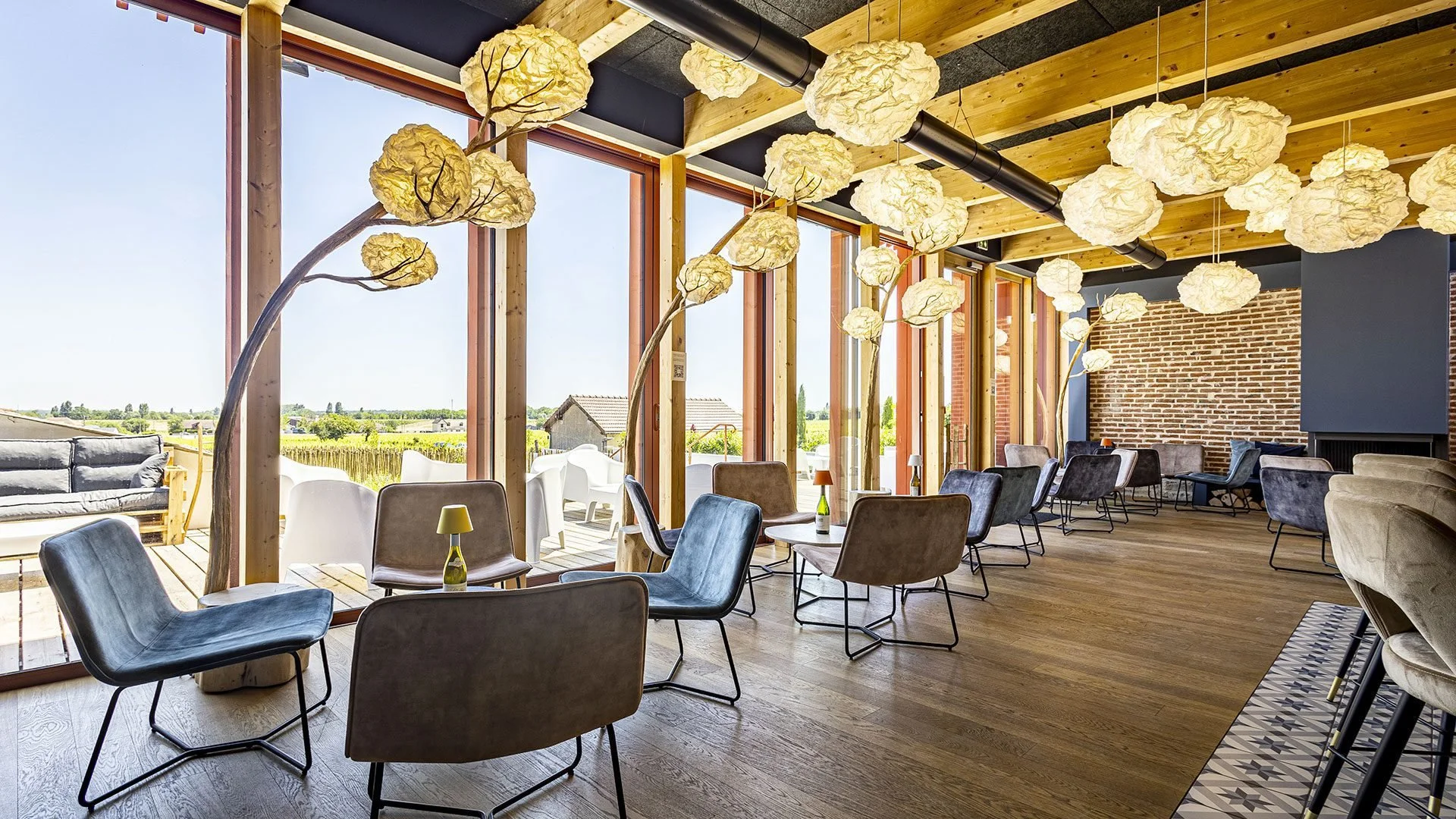
We ended the evening with snacks at La Maison du Colombier, dinner and a night cap at Slanted Door in our hotel, and a wander around the streets of Beaune.
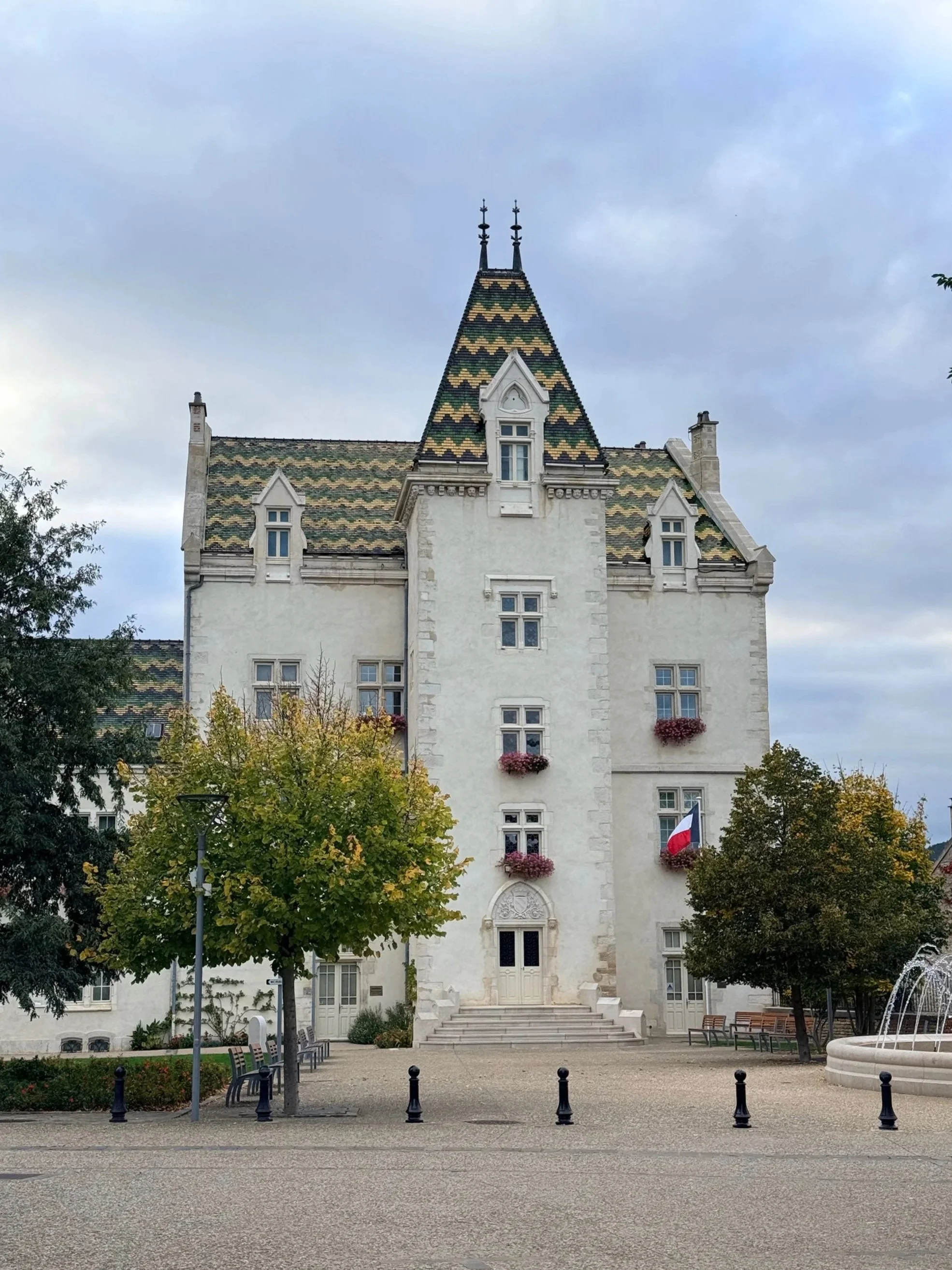
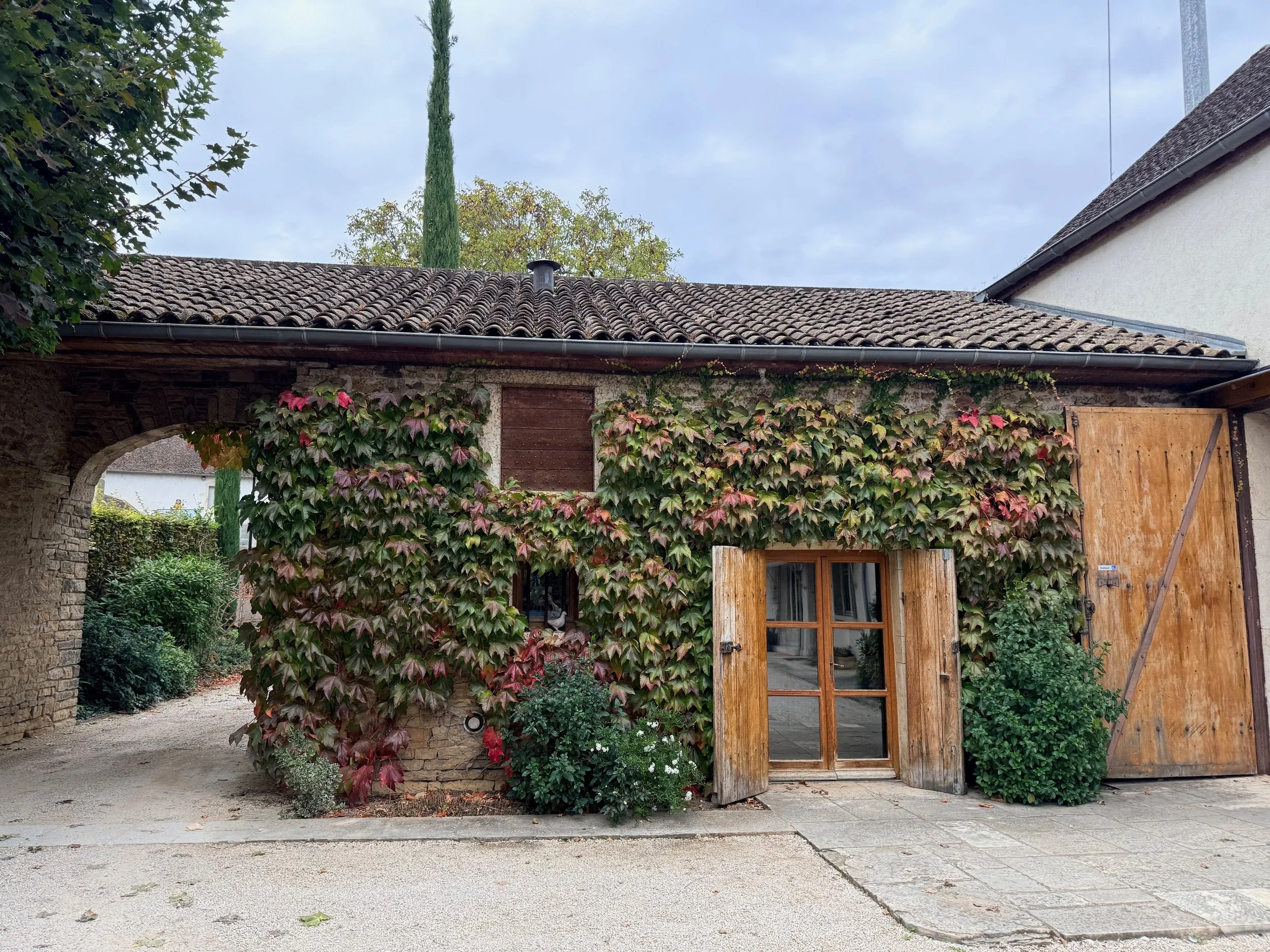
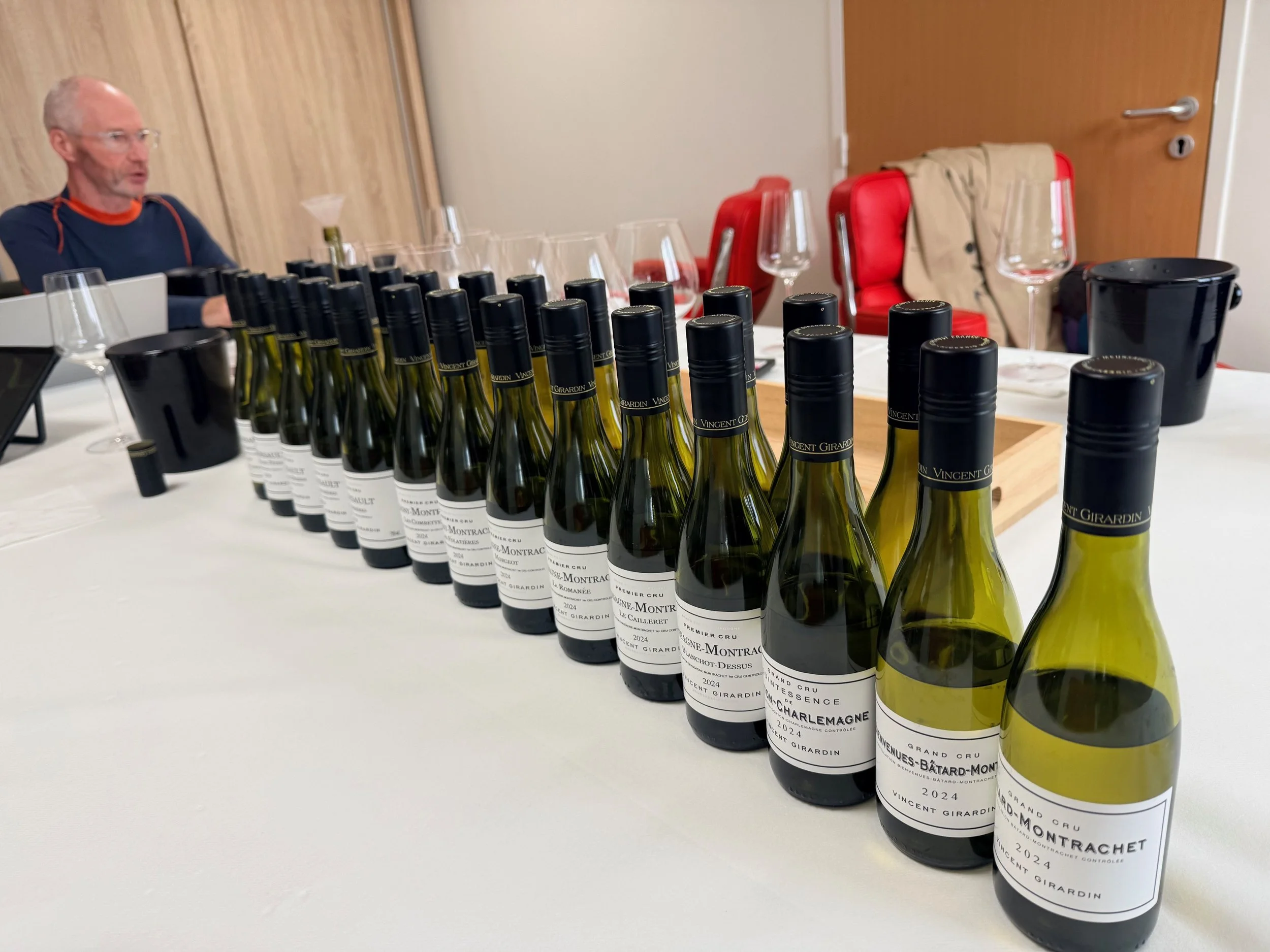
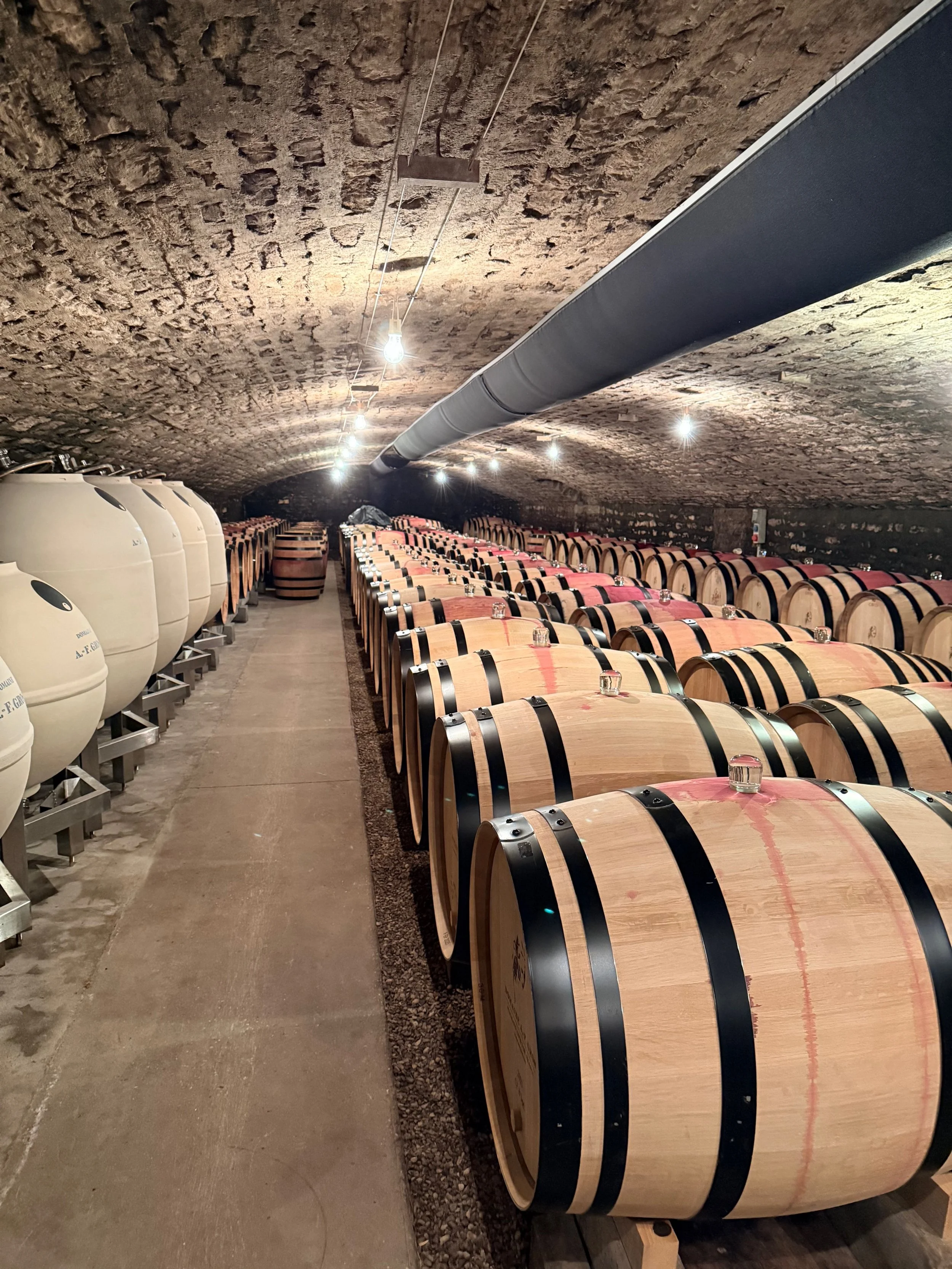
Day 3: Cycling Beaune → Santenay via the Voie des Vignes
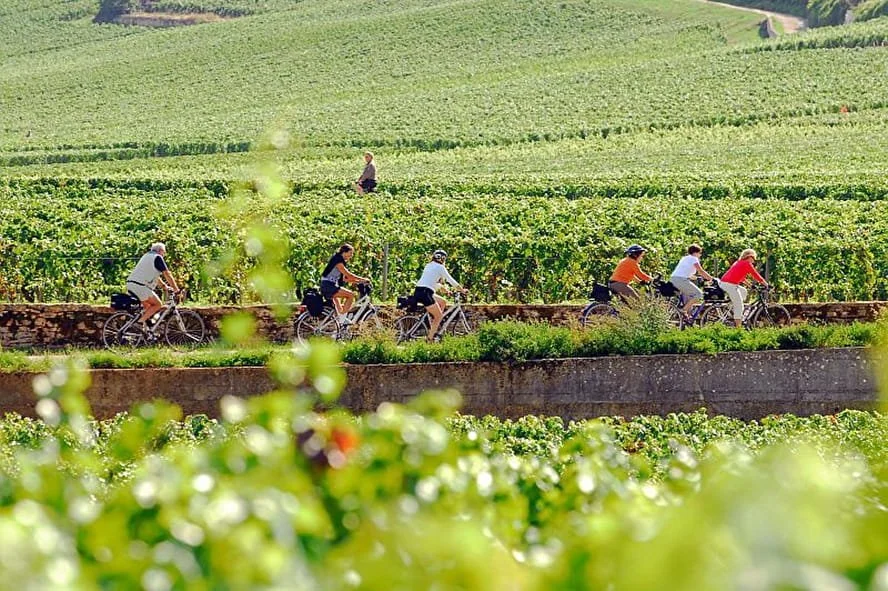
Biking through the vineyards on the Voie des Vignes
Dedicate your third day to the Voie des Vignes, one of France’s most scenic and beginner-friendly vineyard bike routes. Rent e-bikes in Beaune and follow the dedicated path south through Pommard, Volnay, Meursault, Puligny-Montrachet, Chassagne-Montrachet, and finally Santenay.
The ride is mostly flat, utterly beautiful, and lined with opportunities to stop for tastings along the way. If you want a more structured day, choose one or two wineries in Puligny or Chassagne and leave the rest open for spontaneous detours.
For lunch, Le Flaive in Puligny-Montrachet is an ideal midpoint — refined but relaxed, with a wine list that reminds you you’re in Chardonnay country.
You can ride all the way to Santenay before looping back, or turn around earlier if you want more time in Beaune. Either way, this is arguably the most “wine country fantasy” moment of the entire trip.
What we did: We picked up our e-bikes from Bourgogne Randonnées in the morning, and headed straight out. We opted to go to the furthest town of Santenay first and work our way back. The weather was a bit tough, so we didn’t commit to pre-booked wine tasting, but there were some great spots to pop into unannounced or a very short-notice reservation, like Les Heritiers Saint-Genys, Armand Heitz, Les Parcellaires De Saulx, and La Cree. You can also do a wine tasting at Le Flaive over lunch, or even visit their property for a more in-depth experience.
Optional Day 4: The Côte de Nuits
We hotly debated where to spend our extra day, whether it be visiting a wine region we hadn’t been to (like Chablis or Beaujolais - see details in section below) or taking an extra deep dive into the Côte de Nuits. Given how world-renowned the region is and how much we love Pinot Noir, we opted for a second day in the Côte de Nuits, this time with Bill Nanson of The Burgundy Report. We couldn’t be happier with our choice.
There is so much to taste, see, and learn in this area that it is well-worth a re-visit. Let your tour operators know that you’re already planning a trip (or plan a second day with the same operator) to mix up which areas you dive deep into, but the area is so vast that you could live here for years and never learn all there is to know.
What we did:
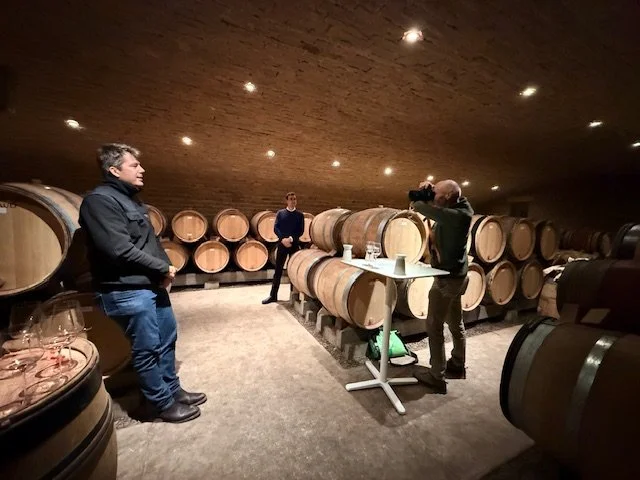
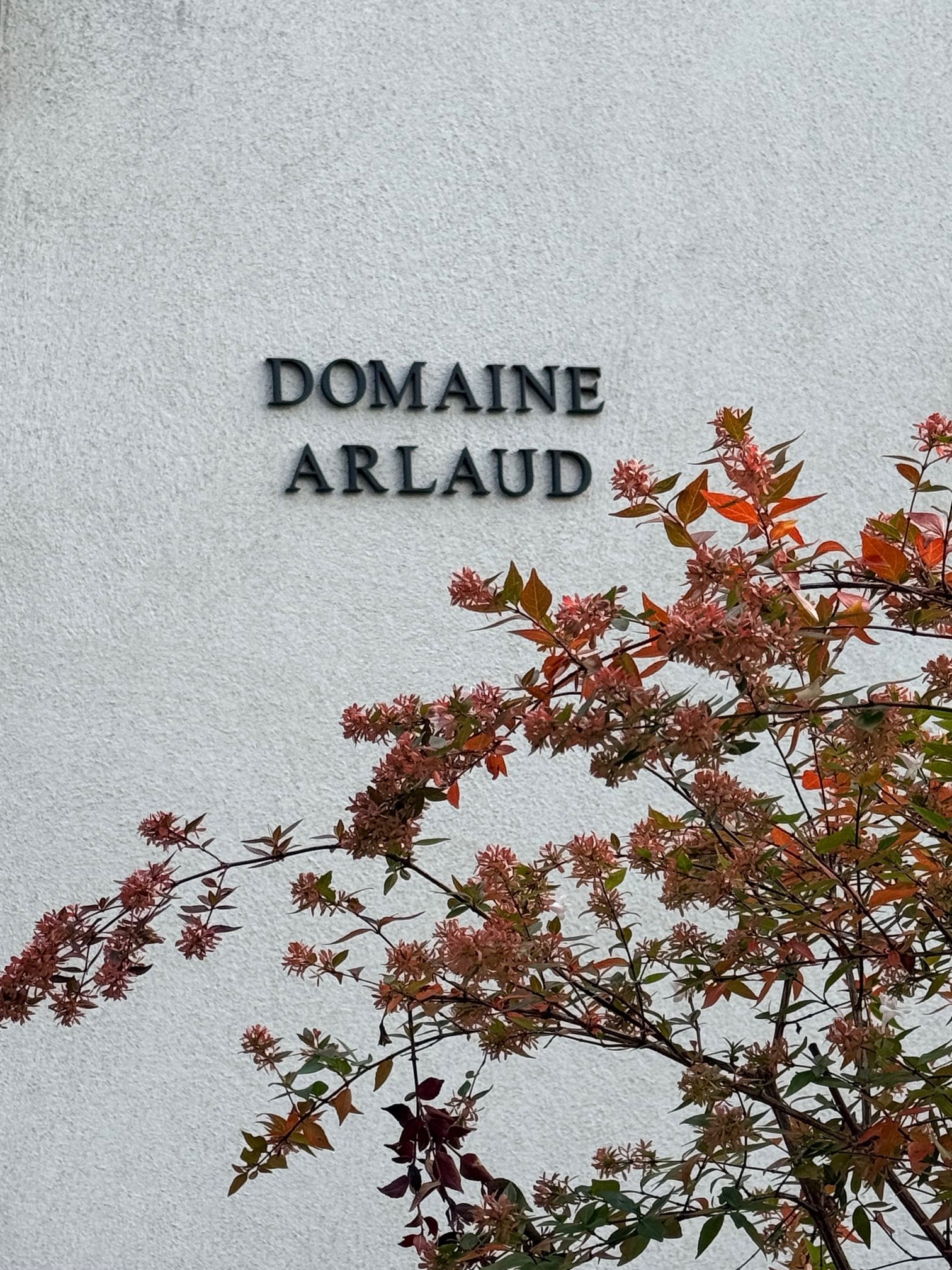
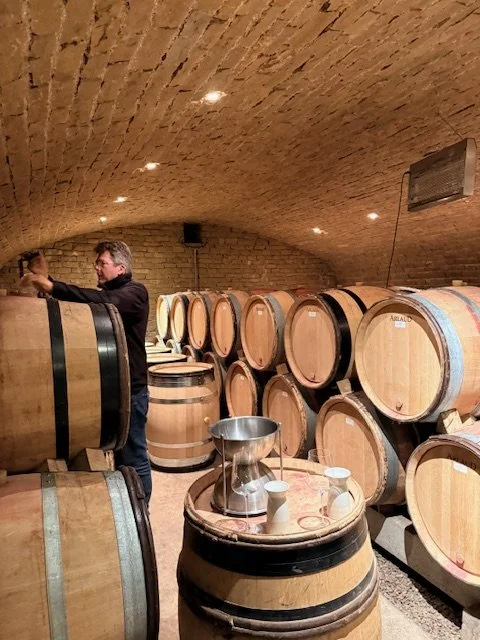
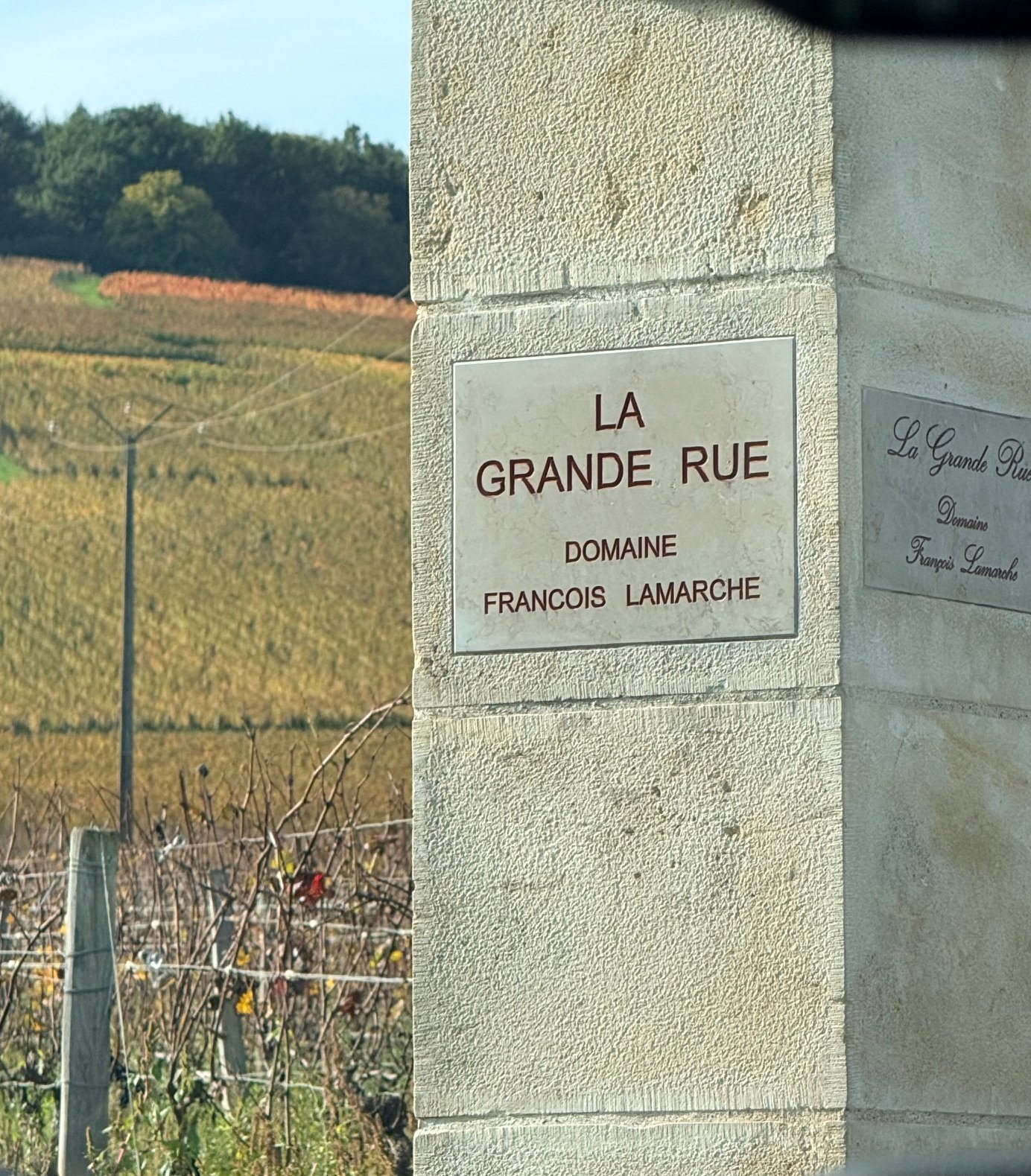
Bill once again met us at our hotel for coffee before we ventured off to our day of tasting, including:Domaine Domaine Arlaud, Morey
Domaine Arlaud, Morey St. Denis
Lunch at Bistro Lucien, Gevery-Chambertin
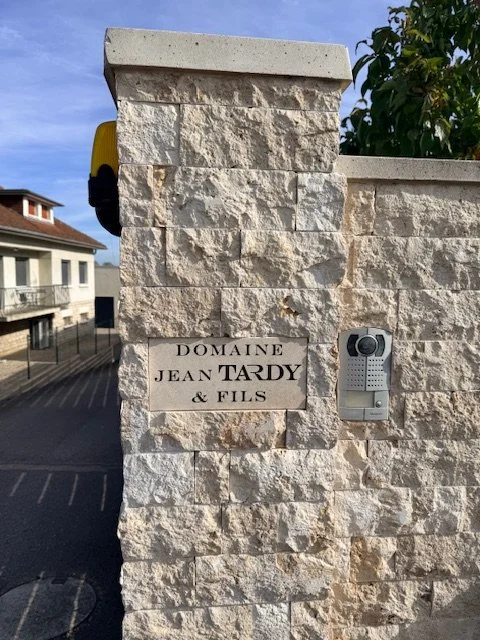
Domaine Jean Tardy et Fils, Vosne-Romanée
Domaine Pierre Guillermot, Savigny-lès-Beaune
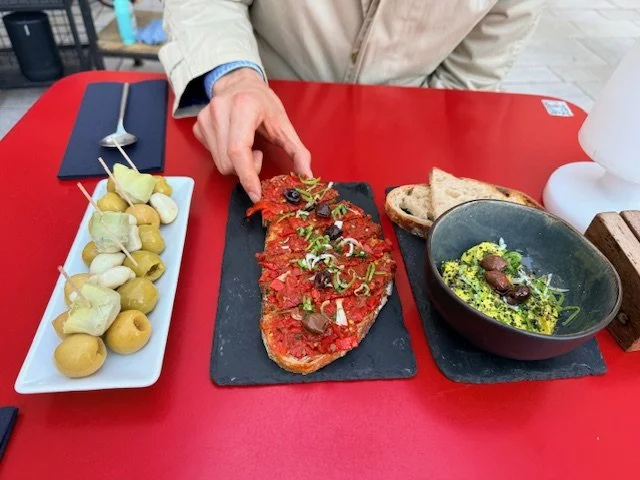
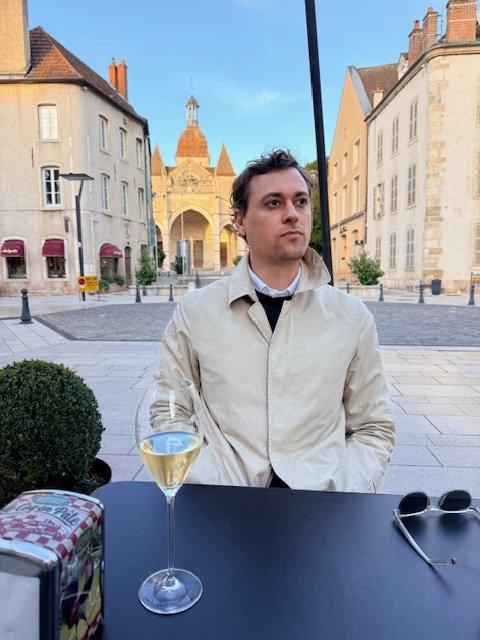
We ended the evening with snacks back at La Maison du Colombier for a light bite of olives, hummus, flatbread, and, of course, a glass of wine (went with the regions sparkling wine called cremant), followed by a night-cap at the hotel. Perfection.
Optional Add-Ons… Go Deeper Into Burgundy
If you have an extra day, you’ve got two smart directions you can go: double down on the Côte de Nuits or branch out into another Burgundy subregion. Both are worth it — it just depends on whether you want more Pinot Noir precision or a totally different flavor of Burgundy.
Option 1: A Second Day in the Côte de Nuits (Highly Recommended)
The Côte de Nuits is big enough, and stylistically dramatic enough, that a second day feels like unlocking a new chapter rather than repeating yourself.
Spend this day working village by village — Marsannay → Fixin → Gevrey → Morey → Chambolle → Vosne-Romanée → Nuits-St-Georges — and you’ll start to see how small changes in slope, exposure, or soil translate into completely different wines.
If you can book another insider-led day (like we did), even better. Seeing how producers interpret the same vintage across the Côte de Nuits is the kind of perspective you just don’t get from standalone tastings.
Option 2: Chablis — A Cool-Climate Reset
North of Beaune by about 1.5–2 hours, Chablis feels like stepping into a different universe — same grape (Chardonnay), totally different attitude. The wines are leaner, mineral-driven, and shaped by fossil-rich Kimmeridgian limestone.
You can visit as a day trip from Beaune with certain tour companies, or stay a night if you want a slower pace. It’s especially appealing if you want contrast: pure whites, crisp lines, zero overlap with the Côte d’Or’s richer styles.
Option 3: Beaujolais — Bright, Juicy, and Criminally Underrated
South of Burgundy proper, Beaujolais offers upbeat, fruit-forward wines built on Gamay — plus a scattering of villages that each have their own personality.
It’s a great add-on if you want a lighter, more playful counterpoint to Pinot Noir and Chardonnay. The “crus” — like Morgon, Fleurie, and Moulin-à-Vent — offer the most depth. You can easily book a driver from Beaune or spend a night closer to Lyon for a change of scenery (and excellent food).
Option 4: The Mâconnais — Sun, Stone, and Generous Chardonnay
If you want something closer than Chablis or Beaujolais, the Mâconnais is a comfortable middle ground. About an hour south of Beaune, it offers warmer-climate Chardonnay driven by stone, sunshine, and a more relaxed rural landscape. Pouilly-Fuissé is the star, but there are dozens of smaller appellations where the value is excellent.
Which One Should You Choose?
Wine nerd mode: Do the second day in Côte de Nuits.
Contrast + crisp whites: Chablis.
Playful, energetic reds: Beaujolais.
Close-by, generous Chardonnay: Mâconnais.
Final Notes
Burgundy can feel intimidating from the outside, but it doesn’t need to be. This itinerary gives you a thoughtful introduction - enough structure to move through the region with confidence, without needing deep wine knowledge or months of planning.
Even if wine isn’t your main focus, the rolling vineyards, storybook villages, and beauty of the Côte d’Or make it a place worth exploring. Let guides handle the logistics, give yourself permission to wander, linger over long lunches, and savor moments that have nothing to do with tasting notes.
Cheers!
